
No products in the cart.

A hyfrecator is a medical device used for the removal of various non-cancerous benign skin lesions, such as moles, skin tags, warts, and sebaceous hyperplasia. It utilises high-frequency electrical current to cauterise and remove unwanted tissue from the skin.
Please be aware we require all patients to visit a GP or skin specialist to have a thorough skin check performed on any lesion/s they desire to get removed prior to treatment. This is to ensure we are not removing something that is potentially cancerous. We cannot diagnose lesions at our clinic and will refuse treatment without confirmation of skin check.
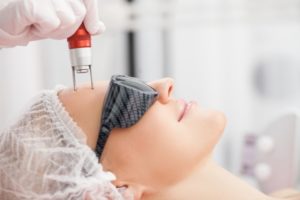
The hyfrecator delivers a high-frequency electrical current to a fine, needle-like electrode tip. This electrical current generates heat, which is used to coagulate and vaporise the targeted tissue.
The process is precise and controlled, allowing for targeted removal of the lesion while minimising damage to surrounding healthy tissue.
The hyfrecator can be used to remove a wide range of non-cancerous benign skin lesions, including but not limited to moles, skin tags, warts, sebaceous hyperplasia, and keratoses. It is particularly effective for lesions that are small to moderate in size and located on the surface of the skin.
The removal of non-cancerous skin lesions using a hyfrecator is typically well-tolerated by patients and requires 5-10 days of downtime. While some mild discomfort or a tingling sensation may be experienced during the procedure, topical anaesthesia is used to maximise comfort.
Following the removal of the skin lesion with a hyfrecator, the treated area may initially form a scab or crust, which will eventually slough off, revealing healed skin underneath. In some cases, multiple treatments may be required to completely remove larger or more stubborn lesions. Patients are typically advised to follow post-procedure care instructions provided by their healthcare provider, such as keeping the area clean and protected from sun exposure.
Overall, the hyfrecator is a safe, effective, and minimally invasive tool for the removal of non-cancerous benign skin lesions. However, it’s essential to consult with a qualified healthcare professional to determine if this procedure is appropriate for your specific skin concerns and to ensure safe and optimal results.